Bending Toward—Or Away From—Racial Justice?
Bending Toward—Or Away From—Racial Justice?

Case Overview
Instructional coach Sophie Biel works in the Arc Charter Network, splitting her time between five schools with very different demographics. Previously, she helped develop a new culturally-responsive social studies curriculum with the team at Arc Downtown. Now she's excited to implement the new curriculum at Arc Coastal. However, she doesn't anticipate the many challenges to a successful implementation, from reluctant teachers to angry parents to a school culture that values order over critical thinking.
Should Sophie modify or even delay the rollout of a curriculum she deeply believes in? How do leaders decide when it's the right time to push for change?
You can find and download the full case study below.
Key Questions You Will Explore
- What is values-driven leadership?
- How can educational leaders support educators and students in making their own values-oriented decisions?
Hear from the Experts
Why is this issue a real dilemma? Watch short video commentaries to explore the complexities, challenges, and values at stake in this case.
As you watch each video, consider the following questions:
- What resonates with you in this video?
- What questions does this video raise for you?
- How does this video impact your understanding of the dilemmas in the case?
On Bravery and Trust
Carolina Brito, Principal in DC Public Schools, answers the question: How can leaders leverage relationships of trust to tackle values disagreements?
On Supporting Teachers
Paul Freeman, Superintendent of Guilford Public Schools, answers the question: How can leaders support their teachers' engagement with challenging topics?
Additional Resources
- The American Psychological Association explains the benefits of culturally-responsive curriculum and ways that teachers can implement such curriculum well. (redirect)
- Implementing a curriculum like Arc Charter’s new culturally-responsive curriculum often comes with challenges. This piece both examines those challenges and highlights the benefits of such a curriculum (redirect).
- This think piece stresses the importance of implementing coherent, teacher-built curriculum (redirect) across schools.
- A curriculum developer for the New York City Department of Education reflects on her experiences creating and implementing curriculum across districts. In her reflection, she explains the benefits of a user-centered approach to developing curriculum (redirect).
- The responsibility for creating a sense of belonging for students of color like Nia disproportionately falls on teachers of color. This article from Learning for Justice explains how this discrepancy occurs and what White teachers can do to take on this work (redirect).
- To give a better understanding of charter networks like the one in the case, this resource breaks down some key differences between the types of schools in the U.S. (redirect).
- This opinion piece explores the ways that discipline policies are unequally enforced and argues for more just implementation of these policies (redirect).
Case Reflection Questions
- What experience do you have with developing, implementing, and/or promoting new curriculum? How did that experience compare to Sophie’s in the case?
- Which character did you most identify with in the case? Why?
- Which character did you find it hardest to identify with or understand in the case? Why?
Are You Hoping to Lead People Through This Learning Pathway?
The Pathway Facilitation Guide provides comprehensive information and guidance for teaching and learning with this learning pathway:
- guidance on customizing your pathway
- best practices for normative case discussions
- detailed protocols for each case
- discussion questions for different audiences
- extension activities for personalized learning
Want facilitation materials and guidance just for this one case? Download the Case Facilitation Guide!
_1.png)
What's Next? Exploring the Other Cases in this Pathway
This pathway contains five cases and supporting materials that explore dilemmas related to educational leadership in K-12 settings. Click on each case below to learn more and to access the resources.


A pair of seventh graders in Madrid take a topless photo of a female classmate using WhatsApp and forward it to the rest of the class. While the girl in the photo hopes never to hear about the situation again, members of the teaching and administrative staff wonder whether the incident should serve as a learning opportunity for the whole student body.
When the entire school community is affected by behavior that happens at home, how should teachers and school leaders respond? What responsibilities and limits does the school have to discipline students for out-of-school behavior?

In 2021-2022, Arlington, VA, faced criticism from teachers and parents when the district announced a plan to make homework more equitable by eliminating deadlines and other requirements.
How can schools address inequalities in the resources available to students when it comes to homework completion? What can schools do to level the playing field between students who have ample family, social, and financial resources to support their educational success and students who have access to fewer such resources?

Want to Learn More?
Full Normative Case Study Library
Check out more normative case studies related to dilemmas in education.
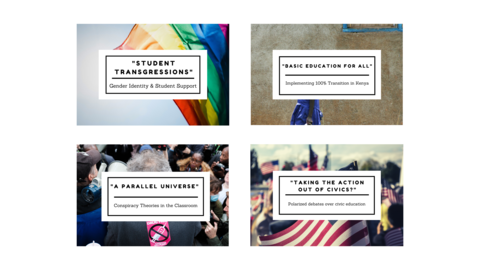
Ethical Leadership in Polarized Times: A Brief-Cases Suite
Explore this collection of normative “brief-cases.” Each one-page case is designed to help educational leaders discuss ethical challenges wrought by social and political polarization.
).png)
EdEthics | Values-Driven Leadership Video Playlist
Watch all the videos in our series of expert commentaries on values-driven leadership from school and district leaders, researchers, and leadership coaches.